
Full Mouth Restoration in Istanbul — When Saving Teeth Is the Right Answer
 Written byDt. Necat Aslan
 Medically reviewed byDt. Berre Karaöz
In short
Mixed implant + crown + bite reconstruction in Istanbul. Doctor-led planning, no default extractions, transparent inclusions. Send your X-ray.
Key takeaways
- Endodontic treatment (root canals) on teeth with vital potential.
- Periodontal therapy to stabilise the supporting tissues.
- Crown lengthening or occlusal adjustment.
- Bridges where short edentulous spans can be restored without implants.
What "full mouth" actually covers
"Full mouth restoration" is not a synonym for All-on-4. It is a category of mixed plans that combines endodontics, periodontology, implants, and prosthetics to restore function, occlusion, and aesthetics, keeping the teeth that should be kept and replacing those that genuinely cannot be saved.
At İnci Diş in Istanbul, we will not default to extracting all your teeth because that is the fastest plan. If your dentition is salvageable in part, we will design a plan around saving it.
What full mouth restoration actually means
A full mouth restoration is a coordinated multi-discipline plan to rebuild a patient's dentition where the existing teeth and bite are no longer functional or aesthetically acceptable. Possible components include:
- Endodontic treatment (root canals) on teeth with vital potential.
- Periodontal therapy to stabilise the supporting tissues.
- Crown lengthening or occlusal adjustment.
- Bridges where short edentulous spans can be restored without implants.
- Implants for missing teeth where bridge anchorage is unsuitable.
- All-on-4 / All-on-6 for arches that are truly beyond rescue.
- Veneers, crowns, or onlays on remaining teeth that need aesthetic correction.
A real restoration plan is *case-specific*. It is not a package.
Two archetypes — and how we plan them
Archetype A — End-stage dentition
The patient has lost many teeth or has remaining teeth that are unrestorable (severe periodontal disease, root fractures, large failed restorations). The most predictable plan is full-arch implant rehabilitation: All-on-4 or All-on-6, single arch or both.
Archetype B — Salvageable dentition
The patient has many teeth that *can* be saved. The plan combines:
- Endodontic and periodontal stabilisation of the rescuable teeth.
- A small number of implants for the genuine gaps.
- Crowns or veneers on selected teeth for occlusion and aesthetics.
- Occlusal management: a night guard for bruxers, sometimes orthodontic adjustment first.
The result preserves natural teeth where it makes biological sense. It usually takes longer, but the long-term outcome on a patient who keeps their natural roots is meaningful.
We tell you which archetype your case is during the doctor review — not after you arrive.
Why the difference matters
The international dental SERP is full of "full mouth" pages that quietly mean "we extract everything, place All-on-4, fit a hybrid bridge, you fly home." That is a legitimate plan for Archetype A. It is the wrong plan for Archetype B, and patients who accept it lose their natural teeth permanently for a problem that did not require it.
This is the heart of the "Turkey teeth gone wrong" narrative. Most of those cases were not implant cases. They were healthy or repairable teeth shaved down for crowns or veneers in 3–4 days. We do not perform that work.
What we will not do
- We will not place crowns on healthy teeth that don't need them.
- We will not extract restorable teeth to fit a one-trip schedule.
- We will not quote a full mouth restoration before reviewing your CBCT.
- We will not promise a permanent full-arch result on Day 4.
If your case is genuinely Archetype A and you want it done, we plan it carefully, in two trips, with the right materials. If your case is Archetype B and you want it done well, we plan a longer process that may include three visits and considerably less surgery.
Process — staged and CBCT-led
- Photos and X-ray review: initial intake.
- Video consultation: we explain what we see and what we don't yet know.
- CBCT on arrival: definitive diagnostic basis.
- Stabilisation phase: periodontal cleaning, endodontics on rescuable teeth, extractions of non-restorable teeth.
- Surgical phase: implants where indicated; grafting if required.
- Healing: 3 to 6 months at home.
- Prosthetic phase: Visit 2 or Visit 3 — crowns, bridges, full-arch prosthesis as planned.
- Bite adjustment and finishing.
- Aftercare protocol: implant passport, bridge letter, scheduled remote check-ins.
Number of visits and time in Istanbul
| Plan type | Trips | Typical Istanbul time |
|---|---|---|
| Archetype A: full-arch implants both jaws | 2 | 6–8 days then 6–8 days |
| Archetype B: mixed plan with rescue + implants | 2 to 3 | 5–7 days each |
| Pure rehabilitation (no surgery) | 1 to 2 | 5–10 days |
Materials we use
| Material | Use |
|---|---|
| Lithium disilicate (E.max) | Aesthetic crowns and veneers on visible teeth |
| Zirconia | Posterior crowns, full-arch bridges |
| Titanium framework + zirconia | Full-arch screw-retained prostheses |
| Composite onlays | Tooth-conservative posterior restoration where appropriate |
The material is chosen for the tooth, the patient's bite, and the longevity expectation — not as an upsell tier.
Recovery and aftercare
Healing varies by quadrant because different procedures heal on different timelines:
- Periodontal therapy: days.
- Endodontic treatment: days to weeks of sensitivity.
- Crown preparation: short-term sensitivity, settles in 1–2 weeks.
- Implant surgery: soft diet for weeks, osseointegration over 3–6 months.
Your plan will give you a quadrant-by-quadrant timeline. See What Happens After I Return Home.
Risks and limitations
- Mixed plans have more moving parts than single-procedure cases. We coordinate this with a written treatment summary.
- Saved teeth can still fail years later. We choose them by prognosis, not by hope.
- Occlusal disease (bruxism, TMJ dysfunction) must be managed before final prosthetic work for it to last.
- Aesthetic expectations should be discussed and agreed in writing before crown preparation: we use digital smile design for this.
What affects your price
Because the procedure mix varies, the cost varies more than a single-procedure case. Your written plan lists each component with its EUR price.
| Component | Indicative EUR |
|---|---|
| Endodontic treatment per tooth | €120 – €220 |
| Periodontal therapy per arch | €150 – €400 |
| Crown (zirconia / E.max) | €220 – €380 |
| Veneer (E.max) | €280 – €400 |
| Implant + crown (Korean / European / Premium) | €600 – €1,900 |
| Bone graft / sinus lift | as listed in cost page |
| Full-arch implant bridge | as listed in All-on-4 / All-on-6 |
What is included
- CBCT and intraoral scan
- All treatment defined in your written plan
- Temporary crowns, bridges, or dentures during healing where appropriate
- Implant passport for any implants placed
- Written treatment summary across all procedures
- Remote follow-up calendar
- Bridge letter to home dentist
- Warranty terms in writing per component
What is not included
- Flights and hotels
- Treatment of conditions outside the plan
- Long-term maintenance at home (hygienist visits, night guard replacement)
Why İnci Diş
- We do not assume Archetype A. CBCT decides.
- The plan is itemised tooth-by-tooth, with rationale.
- We will refuse to remove healthy or restorable teeth, and put that in writing.
- Aftercare is structured, not improvised.
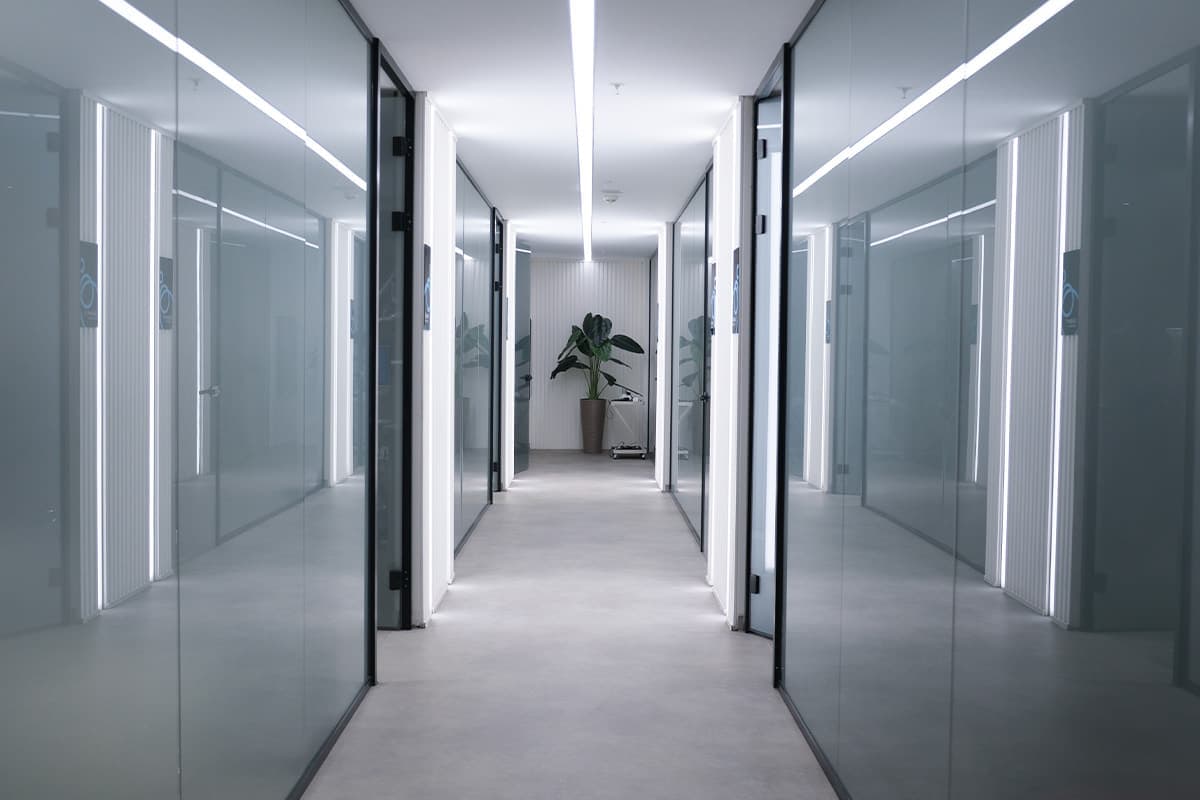
- Our Istanbul clinic in Zeytinburnu is in a medical-tourism cluster, not a tourist-veneer corridor.
Risks the brochures usually skip
Implant work has a known safety profile, but the marketing copy in this category leaves out the parts that actually decide outcomes. We would rather you read them now than find out later. Peri-implantitis (bacterial inflammation around an implant) is the dominant long-term failure mode and it is preventable with consistent hygiene. Upper-back implants approach the maxillary sinus and lower-back implants approach the inferior alveolar nerve, which is why we do a CBCT before every case rather than a 2D panoramic only. Smoking, uncontrolled diabetes and grinding without a night guard each push the failure rate noticeably above baseline, and those are factors you control after you fly home.
What you carry home in your implant passport
Every implant we place is logged on a one-page implant passport that flies home with you and a copy goes to your home dentist. It names the brand and exact model (for example, Straumann BLT 4.1 × 10 mm SLActive), the lot number, the surgical date, the abutment torque, and the restoration material. If anyone ever asks what is in your mouth, the answer is on one page in writing. Most clinics do not provide this and it is the single most useful document to keep.
- Implant brand and model, with diameter and length per site.
- Surgical date and the named clinician who placed each implant.
- Manufacturer lot numbers (so the implant body is traceable for warranty).
- Final crown or bridge material, shade and date of fitting.
- Recommended hygiene recall cadence with your home hygienist.
Frequently asked questions
All-on-4 is one possible *component* of a full mouth restoration. A full restoration may include All-on-4 in one or both arches, or it may not, it depends on whether your teeth can be saved.
Wherever it is biologically reasonable, yes. That is the entire point of Archetype B planning.
Each component has its own service life. Implants are intended to last decades; crowns 10–20 years; endodontic work indefinitely if hygiene is maintained. Maintenance at home matters more than the day-of-fit work.
Yes, we use digital smile design and shade matching. We will agree the final shade and shape in writing before final fitting.
Yes. That is exactly what a mixed plan is for. Different healing timelines are coordinated in your written schedule.
Summarise this article with AI
Open the article in your AI assistant for a quick summary, or to ask your own follow-up questions.
Let Us Contact You
Discover the best version of yourself with personalized aesthetic solutions. Feel confident and comfortable in your own skin with our expert team and advanced treatments.
Get A Free Consultation
Read our Blog