



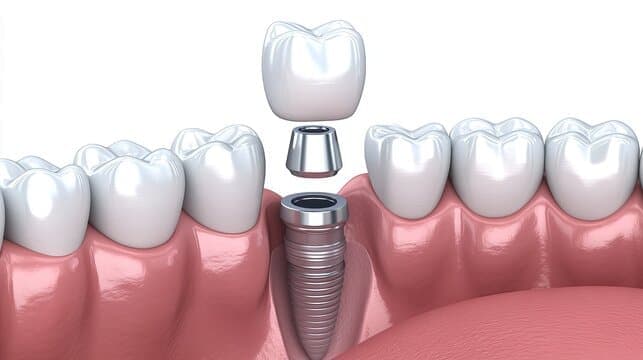
What Are Dental Implants?
Dental implants are one of the most advanced methods of restoring missing teeth. Unlike removable dentures or traditional bridges, implants integrate with the jawbone, creating a stable foundation that looks and feels natural. This makes them a preferred solution for patients who want both durability and aesthetics. By replacing the tooth root itself, implants preserve oral health and provide unmatched comfort.
Benefits of Dental Implants
Dental implants offer much more than a cosmetic improvement. They protect the jawbone, prevent neighboring teeth from shifting, and allow patients to chew without restrictions.
- Restores natural chewing and speaking abilities, improving everyday comfort.
- Looks, feels, and functions like natural teeth, enhancing aesthetics.
- Prevents jawbone deterioration caused by missing teeth.
- Provides a permanent solution, unlike removable dentures.
- Helps maintain facial structure and prevent premature aging.
Candidates for Dental Implants
Not every patient is an ideal candidate, but most healthy adults qualify. Dental professionals evaluate bone density, gum health, and overall oral hygiene before treatment. Patients with chronic illnesses may require special consultation.
- Adults with single or multiple missing teeth.
- Patients with strong jawbone support or willing to undergo bone grafting.
- Non-smokers or those committed to stopping smoking for better healing.
- Individuals with realistic expectations about treatment timelines and results.
Types of Dental Implants
Endosteal Implants
This is the most common method. Small titanium screws are placed directly into the jawbone, serving as artificial roots. They are highly durable and suitable for most patients.
Subperiosteal Implants
These implants sit beneath the gums but above the jawbone. They are recommended for patients who lack sufficient bone density and cannot undergo grafting procedures.
All-on-4 Implants
A revolutionary technique that allows an entire dental arch to be restored using only four implants. This provides a cost-effective and less invasive alternative for patients with multiple missing teeth.
Recovery and Aftercare
The recovery period varies but usually takes several months, as the implant must fuse with the jawbone in a process called osseointegration. Patients may experience mild swelling or sensitivity during the first days, which can be managed with medication.
- Eating soft foods is recommended for the first weeks.
- Brushing and flossing should be continued carefully to maintain gum health.
- Regular dental check-ups ensure proper healing and implant stability.
- Once healed, implants can be treated like natural teeth.
Cost Considerations
The cost of dental implants is influenced by several factors such as the number of implants, bone grafting needs, and the country where the procedure is performed. At İnci Esthetic, high-quality implants are offered at more affordable prices compared to many European and American clinics.
| Country | Average Cost (EUR per implant) |
|---|---|
| Türkiye (İnci Esthetic) | €700 – €1,200 |
| Germany | €2,000 – €3,000 |
| United Kingdom | €2,500 – €3,500 |
| United States | €3,000 – €5,000 |
Conclusion
Dental implants are more than just a cosmetic solution; they represent an investment in long-term oral health. By restoring missing teeth with advanced technology, patients regain their natural smile and improve their quality of life. At İnci Esthetic, patients benefit from affordable yet world-class treatments performed by experienced specialists.
Frequently Asked Questions (FAQs)
A dental implant is a titanium screw that replaces the root of a missing tooth and supports a crown, bridge, or denture, creating a natural and durable tooth replacement.
With proper care and regular dental check-ups, implants can last 20 years or more — often a lifetime.
The procedure is performed under local anesthesia, so patients feel no pain during surgery. Mild discomfort or swelling afterward is normal and temporary.
From placement to final crown restoration, the full process usually takes 3 to 6 months, allowing time for bone integration.
Leaving a gap can cause bone loss, misalignment of nearby teeth, and bite problems. Dental implants prevent these long-term issues effectively.
👉 Many international patients plan a short holiday in Istanbul while recovering.
